
Concrete Driveway Replacement Calgary
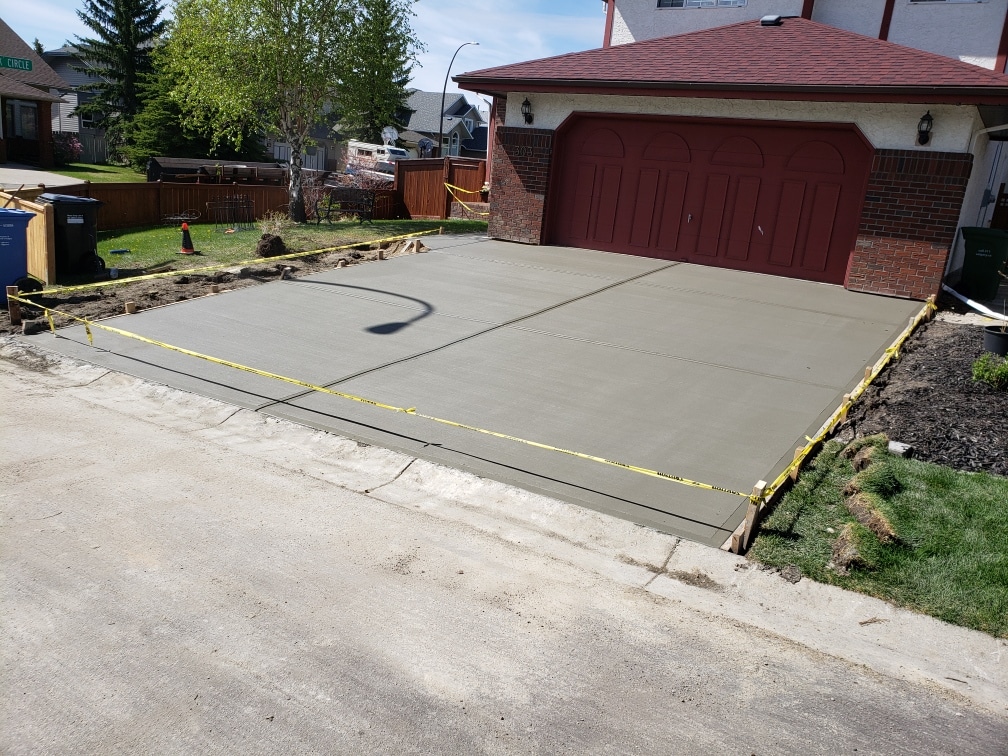
Concrete Driveway Replacement in Calgary, AB
Some driveways can be repaired. Others have reached the point where repair is just postponing the inevitable. When spalling is widespread, the subgrade has failed, or the slab has broken apart beyond what lifting or patching can address, a full concrete driveway replacement is the right move. Concrete Experts handles the complete removal and replacement process (demolition, subgrade work, forming, pour, and finish) for homeowners and businesses across Calgary and surrounding areas.
When Does a Driveway Need to Be Replaced?
We do a lot of driveway repair and lifting work, and we’re always upfront when those options make more sense than replacement. That said, there are situations where starting fresh is the only practical answer:
- The surface is spalling in large sections — layers flaking away or aggregate popping out across much of the slab. This is typically freeze-thaw damage compounded by salt penetration, and it doesn’t get better on its own.
- Cracks are deep, widespread, or actively shifting — not the normal shrinkage cracks that form during curing, but cracks that indicate the slab has lost structural integrity underneath.
- The slab has settled beyond what lifting can correct, or the extent of settlement means the geometry of the driveway needs to be reset from scratch.
- The subgrade has failed — soft spots, poorly compacted original fill, or eroded material that can no longer support a slab reliably. Lifting foam fixes voids; deep injection can mitigate bad soil, but replacement gives us the chance to address the root cause.
- You’re changing the size or layout of the driveway or adding one where there wasn’t one before.
If you’re not sure which category your driveway falls into, we’re happy to take a look and give you an honest assessment at no cost.
See also: Concrete Lifting & Levelling | Driveway Repair
Our Concrete Driveway Replacement Process
A driveway that fails quickly almost always traces back to a shortcut taken during installation — bad subgrade prep, a weak mix, inadequate reinforcement, or skipping the seal. Here’s how we approach each step.
- Demolition & Removal. We saw-cut the perimeter before breaking out the slab — clean cuts at the garage apron and property edges protect adjacent concrete and landscaping from damage during demolition. The broken concrete is hauled away completely, leaving a clean start.
- Subgrade Assessment & Preparation. Before any forming happens, we assess the exposed subgrade for soft spots, poor compaction, or failed fill material. Problem areas are excavated and replaced with quality compacted granular base. This is the step that determines how long your new driveway lasts — concrete is only as stable as what’s under it.
- Forming & Slope. Forms are set to define the slab shape and establish the correct drainage slope away from your home and garage. We typically set a minimum 1–2% grade. Getting slope right here matters — water that drains toward your foundation causes problems that go well beyond the driveway.
- Reinforcement. All replacement driveways are reinforced with 10M bar at 18″ on centre. This holds the slab together if cracking does occur. Our standard pour is 4″ thick, and we can increase both the rebar spacing and slab thickness for heavier use — RV pads, heavy trucks, or any application where additional load capacity is needed.
- Concrete Mix. Exterior driveways in Calgary are required to meet the Alberta Building Code C2 exposure class — the specification for concrete that will face freeze-thaw cycles and de-icing chemicals. We pour 32 MPa Dura-Mix®, which meets the Concrete Alberta standard for residential exterior flatwork: 5–8% air entrainment, a maximum 0.45 water-to-cementing materials ratio, and Portland/Portland Limestone cement content of 300 kg/m³. The air entrainment is what gives the concrete room to handle freezing water without scaling. The low water ratio is what keeps the surface hard and dense.
- Finishing. Once the concrete is poured and screeded to grade, the chosen surface finish is applied. Control joints are tooled or saw-cut at planned intervals to give the concrete places to relieve shrinkage stress, directing any cracking to those joints rather than randomly across the surface. Shrinkage doesn’t always create cracking, but when it does, control joints can help to conceal and control them.
- Curing. Concrete reaches its design strength through a hydration process that takes time, and that process needs to be protected. We guard fresh slabs from rapid drying, wind, and temperature extremes. For late-season pours, we follow cold weather concrete procedures as required by CSA A23.1. One more thing worth knowing: new driveways should not have de-icing salt applied during their first few winters! The surface needs time to reach full strength before salt exposure.
- Sealing. We recommend sealing every new driveway. Calgary’s road salt and freeze-thaw cycles start working on an unsealed surface immediately. A penetrating sealer blocks moisture and chlorides at the surface and costs a fraction of what surface damage repairs later. Ask us about sealing options when you book your estimate.
Click here for a detailed walkthrough of the full replacement process
Finish Options for Replacement Driveways
Replacing a driveway is a good opportunity to choose a finish that suits how the surface will be used and what you want the front of your home to look like. We offer three options for driveways:
- Standard Broom Finish — The most common choice in Calgary for good reason. A broom-dragged texture provides reliable grip in winter conditions, it ages well, and it works with integral colour if you want something beyond plain grey without the cost of stamping.
- Exposed Aggregate — The surface paste is washed away while the concrete is still fresh, revealing the natural stone in the mix. It’s durable, slip-resistant, and holds up well to Calgary’s climate. Sealed exposed aggregate is one of the best long-term finish choices for driveways here.
- Stamped Concrete — Patterns are pressed into the surface before the concrete sets, creating the look of natural stone, brick, or slate. It takes more skill to execute well, and it costs more — but the curb appeal difference is significant, and it can be done in multiple colours.
See all available finish types on our Concrete Finish Types page, or ask about integral colour options when you request your estimate.
Gallery
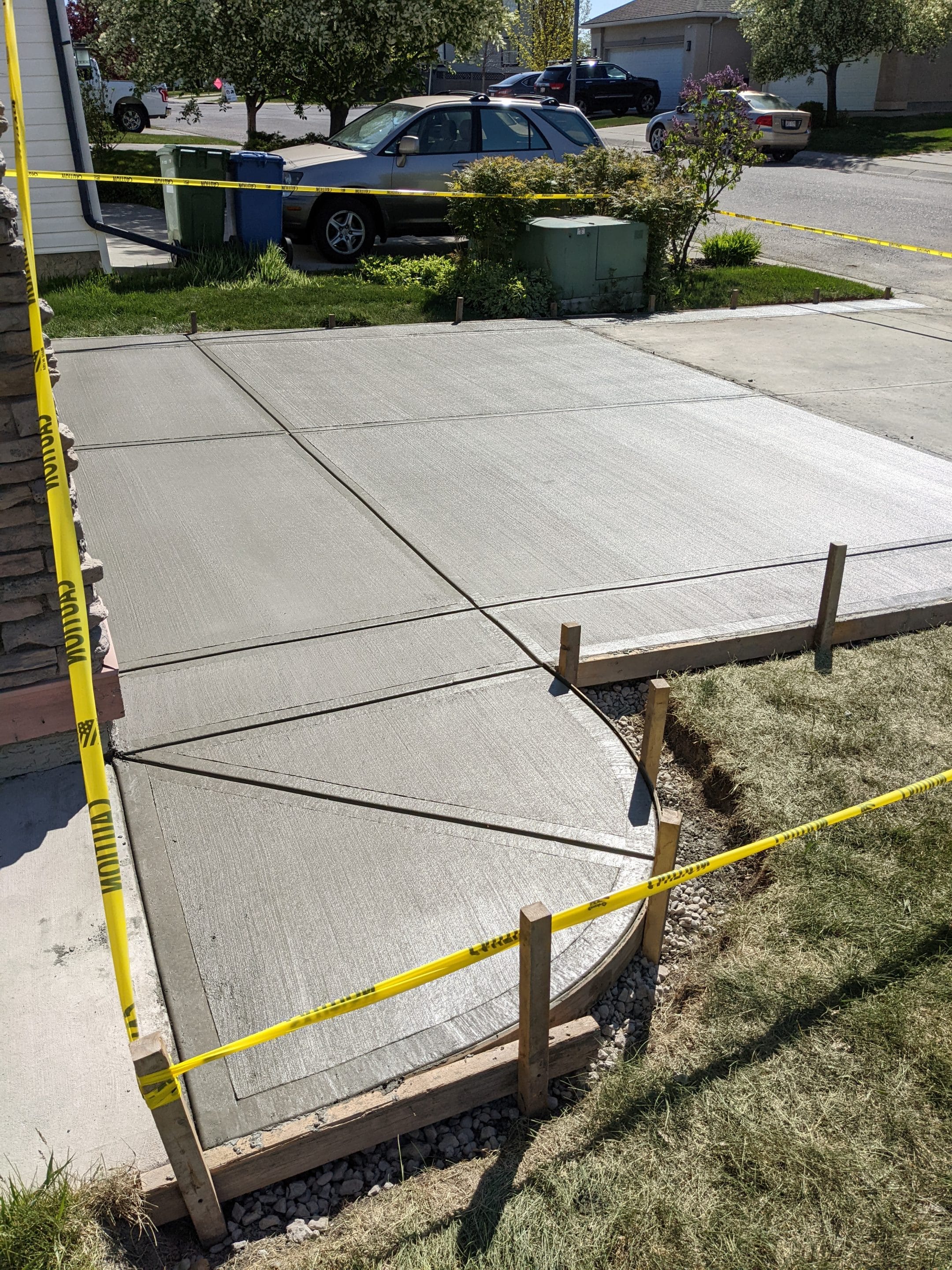
Driveway broomed (7)
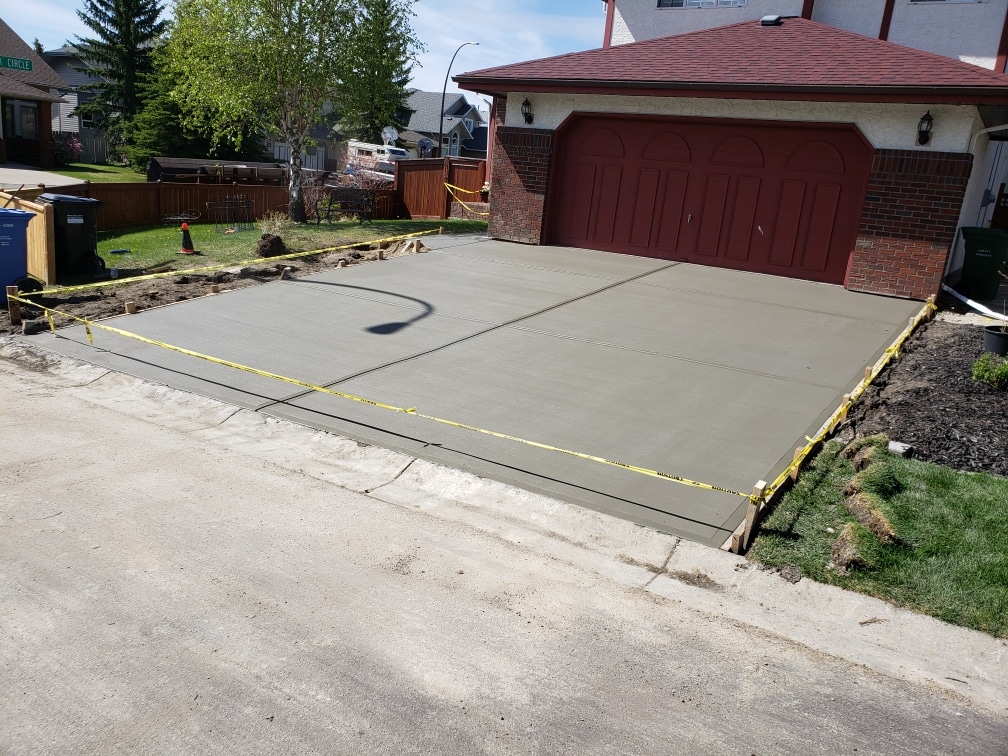
wet brushed driveway
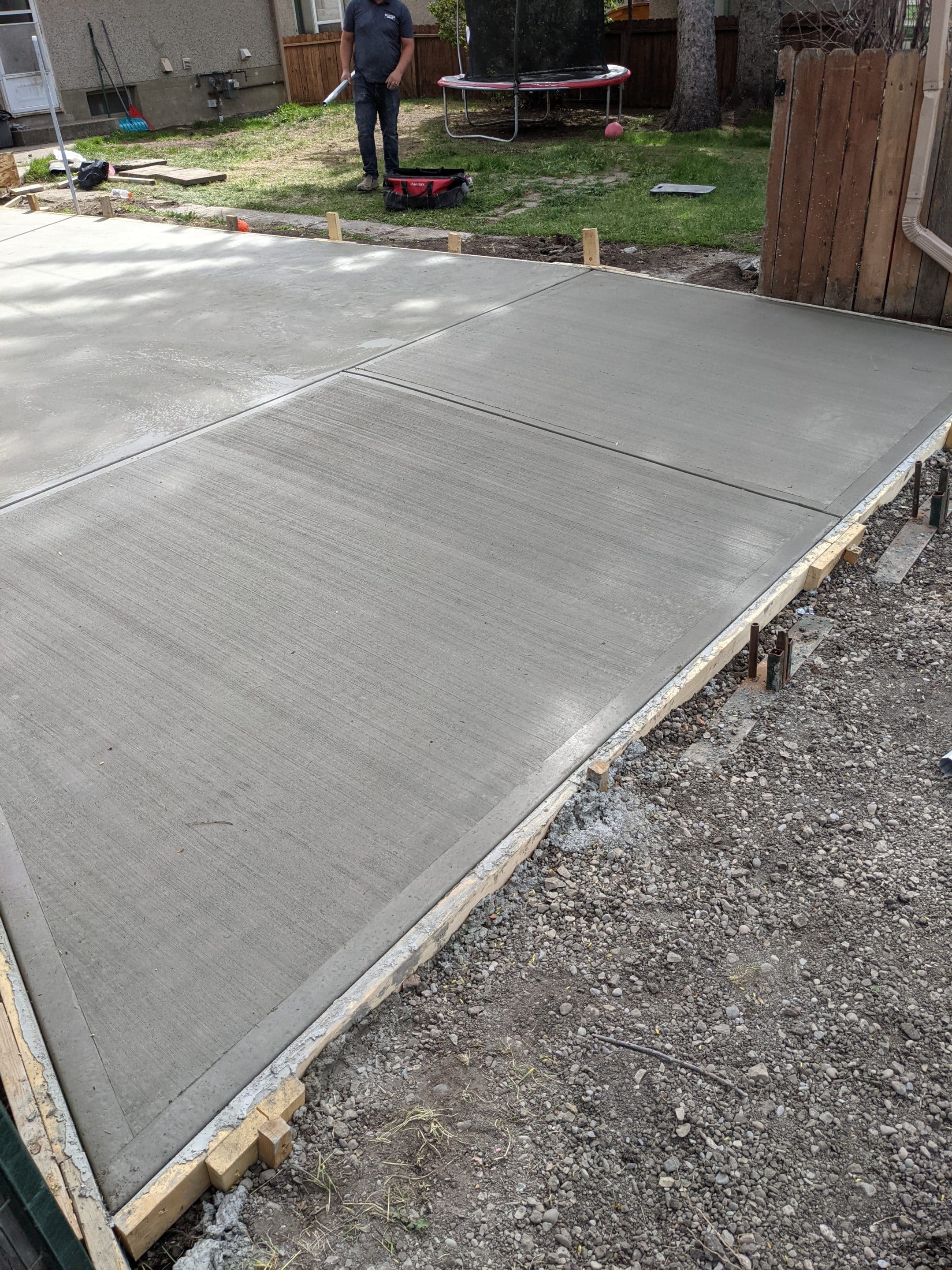
Driveway broomed (6)
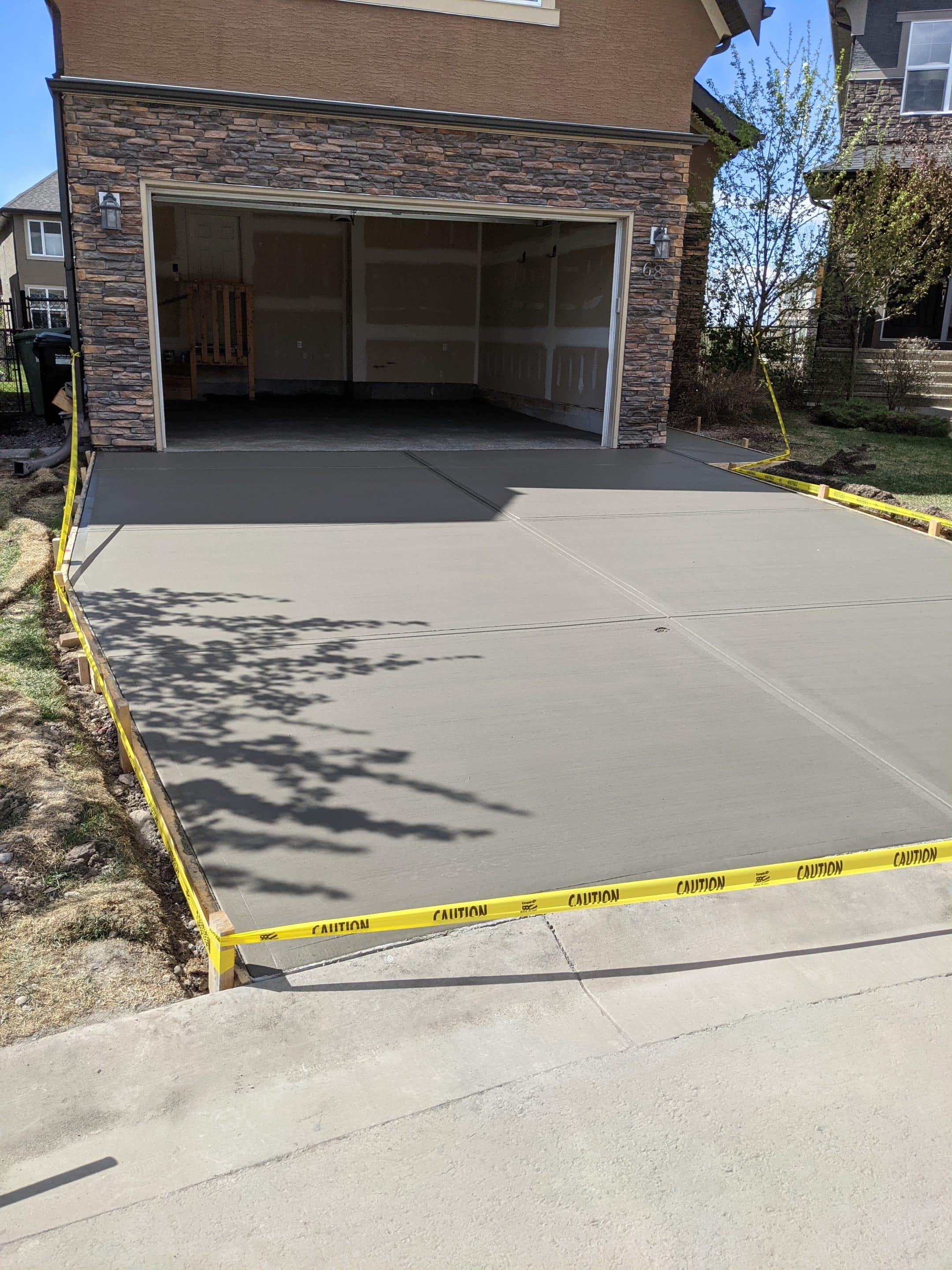
Driveway broomed (5)
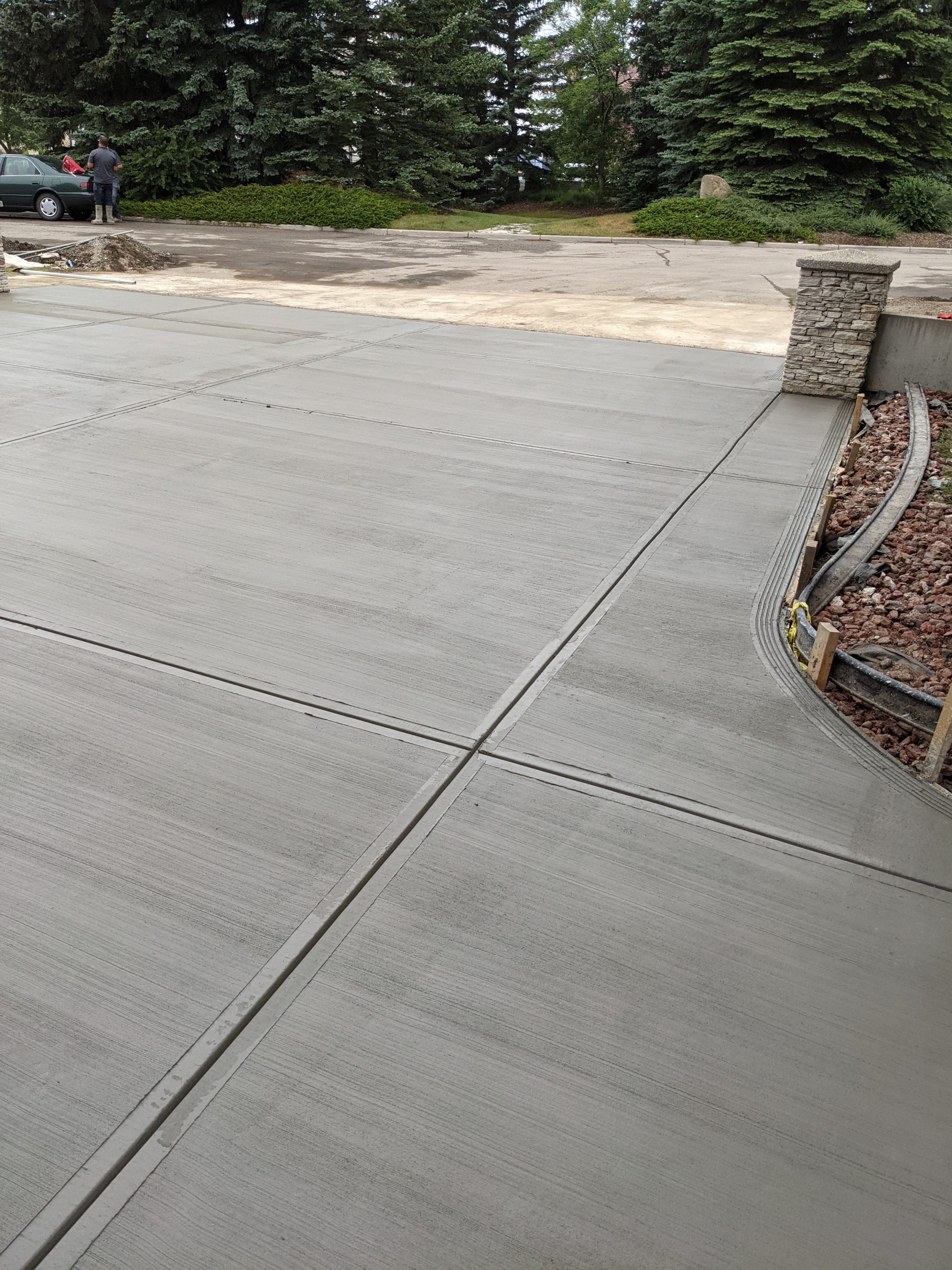
Driveway broomed (4)
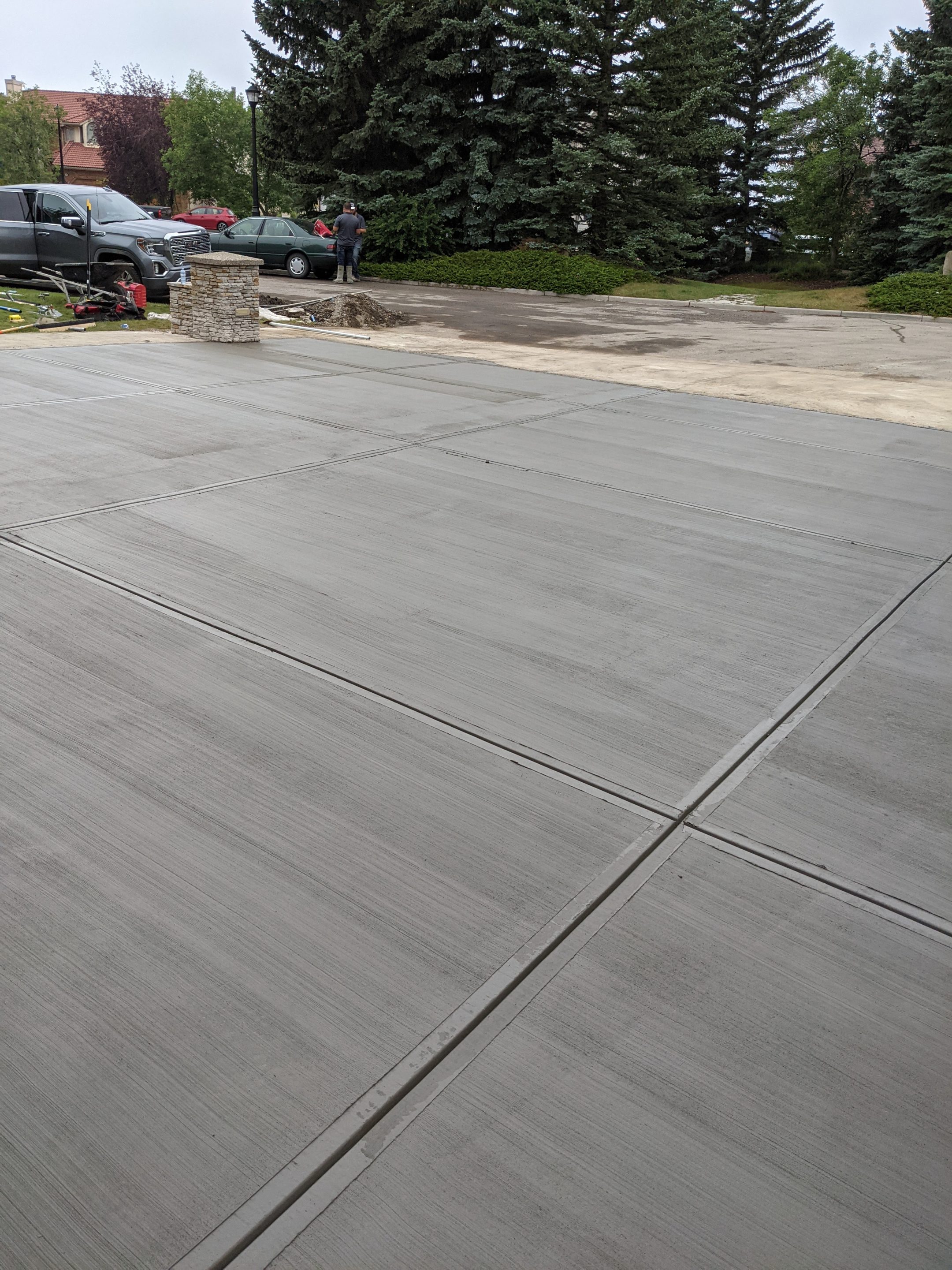
Driveway broomed (3)
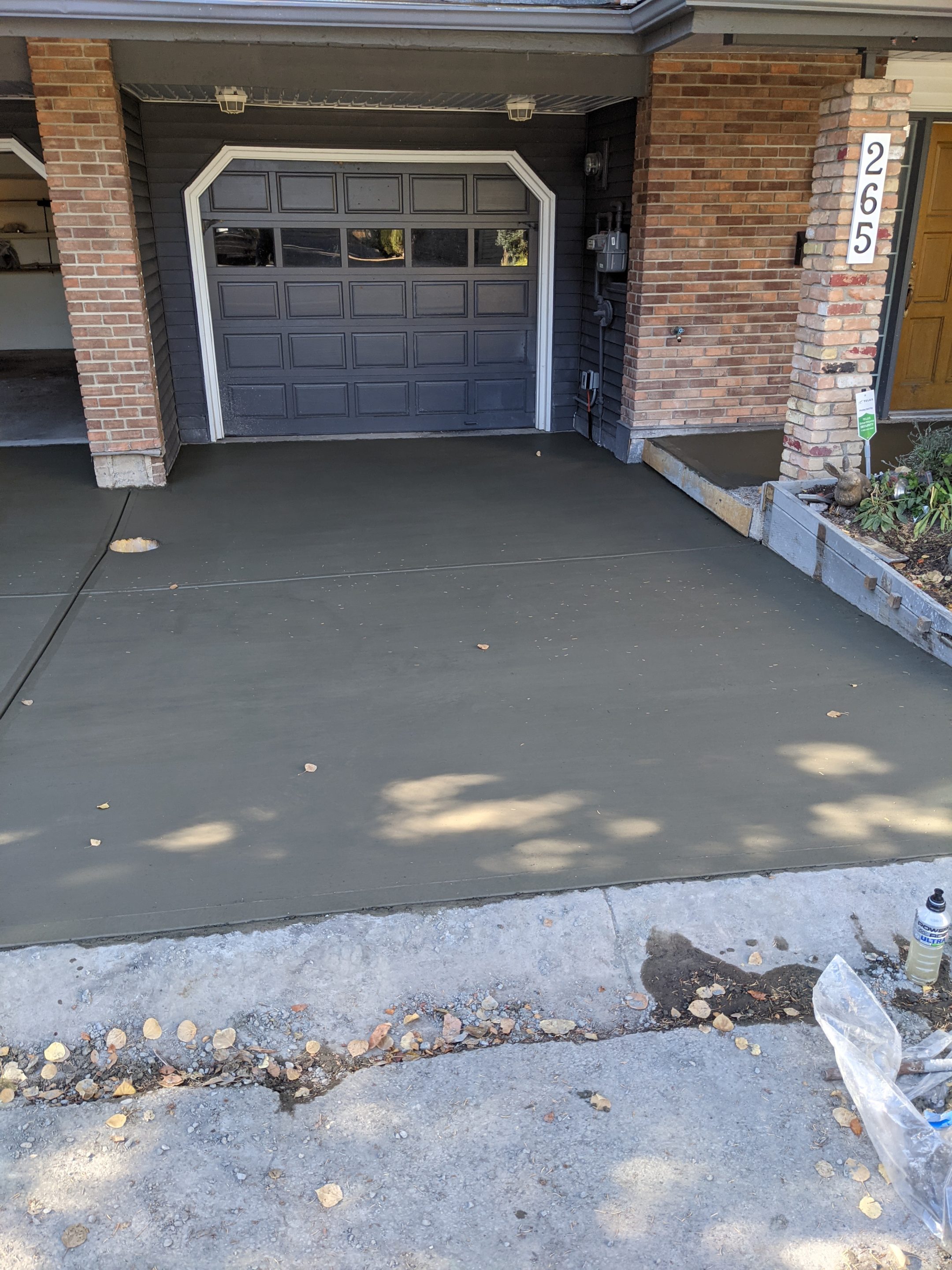
Driveway broomed (2)
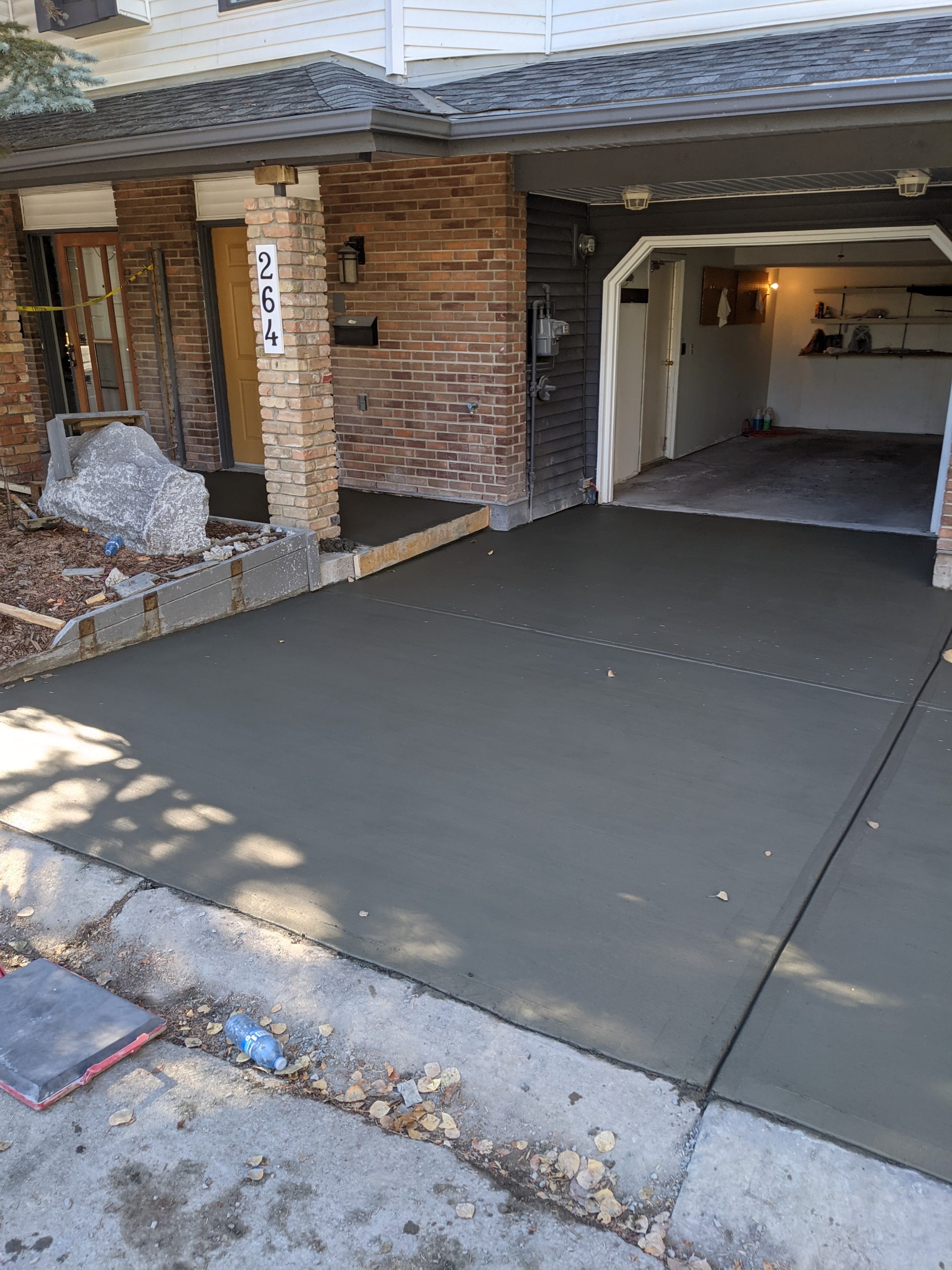
Driveway broomed (1)
Related Services
- Concrete Lifting & Levelling — Is replacement actually necessary? We offer free on-site assessments.
- Driveway Repair — Crack fill, resurfacing, and lifting for driveways that don’t need full replacement.
- Concrete Sealing — Protect your new driveway from road salt and freeze-thaw from day one.
- Concrete Finish Types — The full range of surface finish and colour options.
- Warehouse & Shop Floors — Commercial and industrial flatwork built to the same standard.
- How It Works — Concrete Replacement — A full walkthrough of our replacement process.